Buying your first home in Canada is an exciting step. Before you start looking at listings or applying for a mortgage, you need to know how your current debt might impact the process.
Many Canadians focus only on their credit score, but lenders consider more than that. They look at your income, monthly bills, payment history, and what kinds of debt you have.
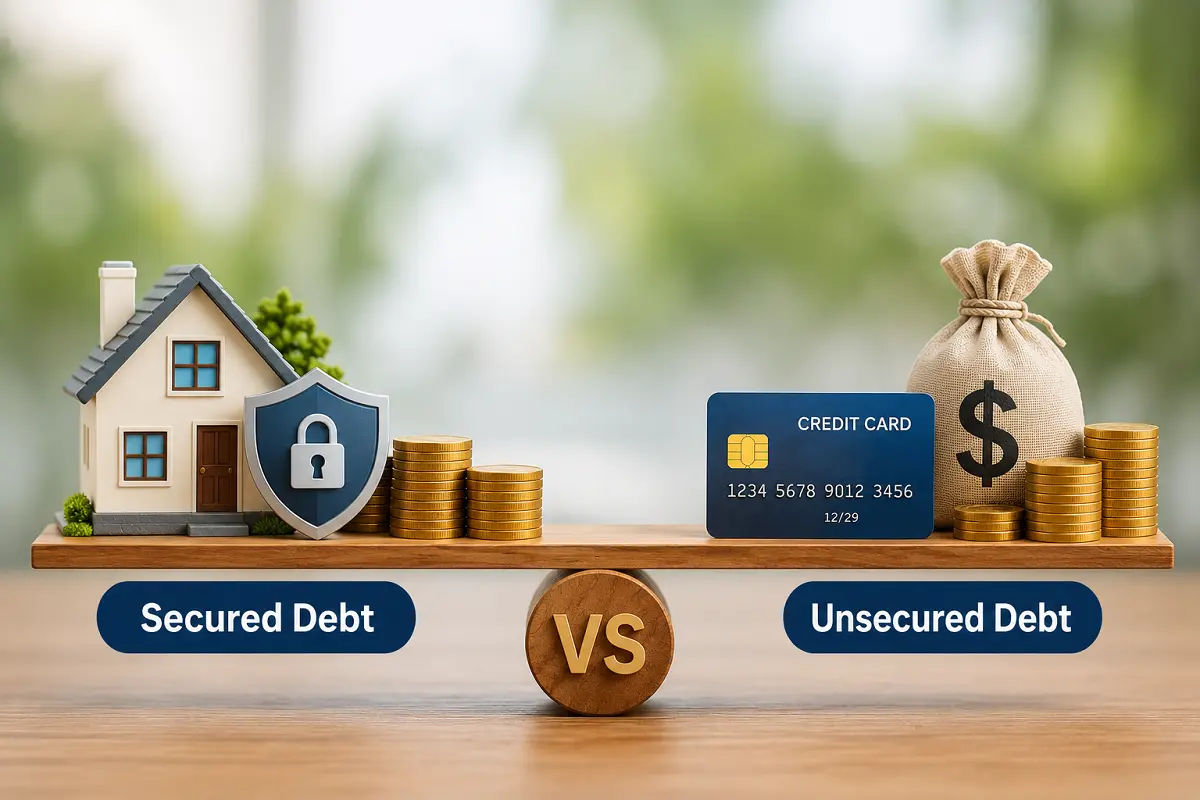
Knowing the secured vs unsecured debt differences helps you get ready to buy a home.
Lenders treat different types of debt differently when you apply for a mortgage. Having debt does not always mean you cannot qualify, but it can change how much you can borrow and what terms you receive.
This guide compares secured vs unsecured debt, covering how each can affect your mortgage application, and what steps you can take to improve your finances before buying a home.
What Is a Secured Debt?
Secured debt is a loan that uses something you own, like a house or car, as collateral. If you stop making payments, the lender may take that asset to recover what you owe.
Secured loans are less risky for lenders, so they have lower interest rates than unsecured loans.
Common examples of secured debt include:
- Mortgages
- Auto loans
- Home equity loans
- Home equity lines of credit (HELOCs)
For example, if you take out a loan to buy a car and stop making payments, the lender can repossess the car. The same goes for a mortgage, which is secured by the home.
What Is Unsecured Debt?
Unsecured debt does not require any collateral, unlike secured debt.
Lenders approve unsecured loans by looking at your credit, income, and financial history. Since there is no asset backing these loans, they usually come with higher interest rates.
- Credit cards
- Personal loans
- Medical debt
- Student loans
- Lines of credit
If you do not pay unsecured debts, lenders cannot immediately take your property. However, missed payments can lower your credit score and may lead to collections or legal action.
Secured vs Unsecured Debt: Key Differences
Understanding secured vs unsecured debt becomes easier when you compare their key features.
Collateral Requirements
- Secured loans require an asset that guarantees repayment.
- Unsecured loans rely solely on the borrower’s financial profile.
Interest Rates and Risk
- Secured loans are a bit risky, so they often come with lower interest rates.
- Unsecured loans usually cost more because lenders take on more risk.
Impact on Credit Scores
- Both secured and unsecured debts appear on your credit report.
- Making payments on time might help to build your credit history. Missing payments can lower your score, no matter what type of debt you have.
Consequences of Default
- If you default on secured debt, you could lose the asset you used as collateral.
- If you default on unsecured debt, you might face collections, lawsuits, wage garnishment in some cases, and long-term damage to your credit.
How Secured and Unsecured Debt Affects Mortgage Approval
Having debt is not always a problem. What matters most is how you manage it.
How Lenders Review Existing Debt
When reviewing your application, lenders evaluate several financial obligations, including:
- Credit card balances
- Auto loans
- Personal loans
- Student loans
- Existing mortgages
- Lines of credit
They also carefully review your repayment history to determine whether you’ve consistently made payments on time.
This is one reason why debt affects mortgage approval in ways that go beyond just the total amount you owe.
Understanding Debt-to-Income Ratio (DTI)
One of the most important factors lenders assume when qualifying you for a mortgage is your debt-to-income ratio.
Your debt-to-income ratio compares your monthly debt payments to your gross monthly income.
For example, if your monthly income is $6,000 and your debt payments total $2,000, your DTI would be approximately 33%.
A lower debt-to-income ratio for mortgage approval generally indicates that you have more financial flexibility to manage a mortgage payment.
Which Type of Debt Concerns Mortgage Lenders More?
Mortgage lenders don’t always prefer one type of debt over another.
Instead, they consider factors such as:
- High credit card balances
- Large personal loan payments
- Auto loan obligations
- Existing mortgage commitments
Lenders often look closely at credit cards because high balances can increase your monthly payments and may signal financial stress.
Can Unsecured Debt Prevent You from Buying a Home?
Not always. Many Canadians get approved for mortgages even if they have unsecured debt. Still, some situations can make approval harder.
Common Scenarios That Affect Approval
Some of the most common issues include:
- High credit card utilization
- Multiple personal loans
- Recent missed or late payments
- High monthly debt obligations
- Excessive revolving credit balances
These factors show how debt can affect your chances of getting a mortgage, especially if they make it harder to afford payments.
When Unsecured Debt May Not Be a Problem
Unsecured debt is often manageable if you also have:
- Strong credit score
- Stable employment
- Reliable income
- Consistent payment history
- Low overall debt obligations
Lenders indeed consider your entire financial picture, not just one part.
Should You Pay Off Debt Before Applying for a Mortgage?
Many buyers wonder if paying off debt first will help them get better mortgage options. The answer depends on your own finances.
Debt That May Be Worth Paying Down First
It often makes sense to pay down high-interest debt first.
Examples include:
- Credit cards with large balances
- Personal loans carrying high monthly payments
- High-interest lines of credit
Paying down these debts can make your monthly expenses easier to handle and may increase what you can afford.
Situations Where Keeping Cash May Be Smarter
However, spending all your savings to pay off debt is not always the best choice.
Maintaining savings can be equally important for:
- Down payment
- Closing costs
- Emergency expenses
- Moving costs
- Home maintenance after purchase
It is usually better to balance paying down debt with keeping some savings, instead of focusing on only one.
Tips for Managing Debt Before Applying for a Mortgage
Getting ready early can help your chances of approval and give you more borrowing options.
Review Your Credit Report
Don’t forget to check your credit report for inaccuracies and resolve any errors before applying.
Lower Credit Card Balances
Lowering your credit card balances can improve your credit utilization and your overall financial profile.
Avoid Taking on New Debt
Try not to finance vehicles, furniture, or other major purchases before applying for a mortgage.
Taking on new debt increases your monthly bills and can affect whether you qualify.
Make All Payments on Time
A steady record of on-time payments is one of the best signs of financial responsibility.
It’s also an important part of meeting mortgage application requirements.
Speak With a Mortgage Professional Early
Talking to a mortgage professional before you apply can help you spot any issues and make a plan to improve your finances.
Knowing what is needed for a mortgage application ahead of time can make the process much easier.
How Diverse Mortgage Group Helps Homebuyers Navigate Debt
Every homebuyer’s finances are unique. At Diverse Mortgage Group, experienced mortgage professionals take the time to understand your goals before recommending financing options.
Our team provides:
- Personalized mortgage advice
- Debt-to-income analysis
- Mortgage pre-approval assistance
- Access to multiple Canadian lenders
- Customized financing solutions based on your financial circumstances
Whether you’re carrying secured debt, unsecured debt, or a combination of both, having expert guidance can help you make informed decisions with confidence.
Conclusion
To understand the difference between secured and unsecured debt is an important step toward becoming a successful homeowner.
While both types of borrowing influence your mortgage application, lenders place greater emphasis on how responsibly you manage your debt, your repayment history, and your overall financial health.
Before you apply for a mortgage, review your finances, reduce unnecessary debt where possible, and ensure you’re in a strong position to qualify.
Ready to buy a home but unsure how your debt may affect your mortgage options?
Contact Diverse Mortgage Group today for personalized guidance, mortgage pre-approval assistance, and expert advice tailored to your financial goals.
Frequently Asked Questions
What is the difference between secured and unsecured debt?
Secured debt is backed by collateral, such as a home or vehicle, while unsecured debt may not require collateral and is approved based on your financial profile and creditworthiness.
Does unsecured debt affect mortgage approval?
Yes. When analyzing your monthly responsibilities, debt-to-income ratio, and repayment history, mortgage lenders take into account unsecured debt such as credit cards and personal loans.
How much debt is too much when applying for a mortgage?
There isn’t a specific dollar amount. Lenders concentrate on whether your debt payments comfortably fit within your income while also adhering to their lending guidelines.
Should I pay off my credit cards before applying for a mortgage?
Reducing high credit card balances may improve your debt-to-income ratio and strengthen your application. However, it’s also important to maintain enough savings for your down payment and unexpected expenses.
What debt-to-income ratio do mortgage lenders prefer?
While acceptable ratios vary by lender and mortgage program, lower debt-to-income ratios generally improve your chances of approval and may provide access to more favorable mortgage terms.